In recent years, Kratom has faced increasing scrutiny and potential restrictions. For many, this natural herb provides relief from chronic pain, stress, and even opioid withdrawal, but it is now at the center of a battle for consumer rights and health freedom. The question is no longer just about Kratom itself; it’s about our right to choose what we put into our bodies and how we choose to manage our wellness.
Consumers who rely on Kratom are far from passive participants. They are actively fighting back against misinformation, regulatory overreach, and potential bans that threaten to strip them of their access to this powerful herb. Through grassroots efforts, petitions, and organized rallies, the Kratom community is raising their voices and ensuring their concerns are heard at the local, state, and federal levels.
The fight for Kratom is about more than just this plant — it’s about preserving consumer choice. It’s about making sure that individuals have access to safe, effective natural alternatives for managing their health. And it’s about ensuring that decisions about health products are made by experts, not by those who may not understand the real benefits of Kratom.
How can you get involved?
Stay informed – Follow up-to-date information on Kratom legislation at The American Kratom Association (AKA), which tracks all relevant bills and updates.
Share your story – Your personal experience with Kratom can make a difference. Whether it’s relief from pain, anxiety, or a battle with opioid addiction, sharing your story is essential.
Take action – Write to your representatives and make your voice heard. Use resources like GovTrack to find and contact your elected officials, or Contact Congress for direct links to make it easier to reach out to the right people.
By standing together, we can ensure that Kratom continues to be available for those who need it. The fight for Kratom is ongoing, but every voice matters, and every action counts.
Join the fight. Stand up for Kratom. Your involvement could make all the difference in securing the future of this important herbal remedy.
Tag: DEA
-
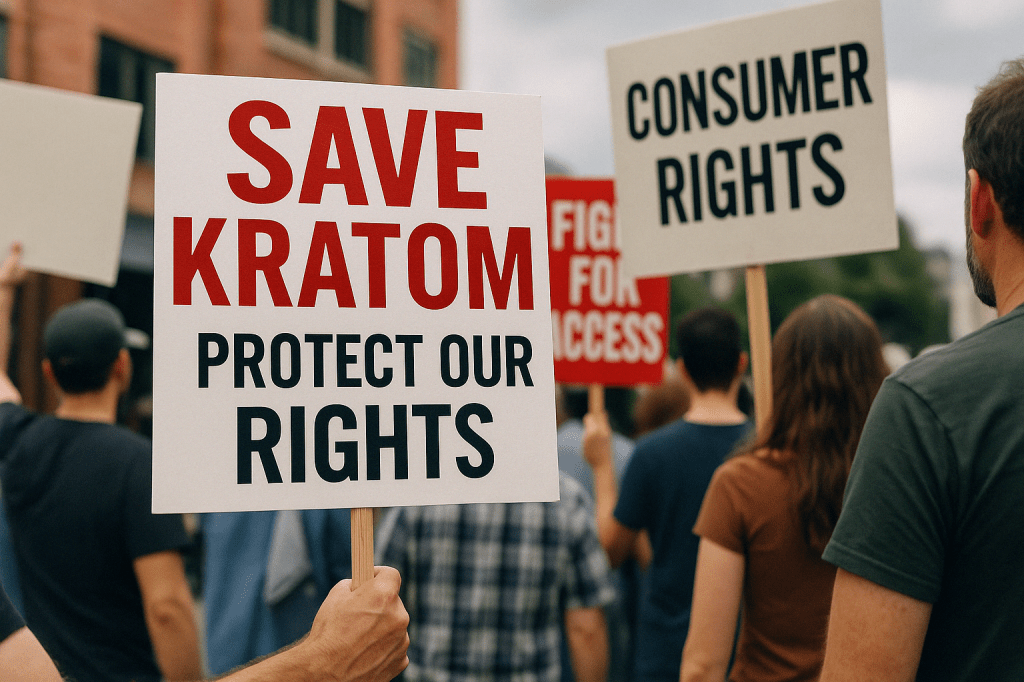
The Fight for Access: How Consumers Are Pushing Back
-

The KCPA: Protecting People, Not Just Plants
The Kratom Consumer Protection Act (KCPA) isn’t just about Kratom—it’s about protecting the people who rely on it.
Right now, Kratom exists in a legal limbo. In some states, it’s fully legal. In others, it’s criminalized. And in far too many, it’s legal but completely unregulated—which opens the door to shady vendors, contaminated products, and sensationalist headlines when things go wrong.
That’s where the KCPA comes in.
The KCPA creates a simple framework:
Age restrictions to keep Kratom out of the hands of minors
Product testing to prevent contamination or adulteration
Proper labeling so consumers know what they’re taking
Penalties for vendors who cut corners or mislead the public
It’s common sense. It’s consumer safety. And it’s long overdue.
When states adopt the KCPA, they’re not just saying “Kratom is legal.” They’re saying:
We believe people deserve safe access to natural tools without the fear of dirty products or bad actors poisoning the well.
But here’s the problem: every state has to fight for this on their own. Activists, advocates, and everyday consumers have to show up to committee hearings, educate lawmakers, and push back against misinformation. One state at a time. That’s a slow, exhausting battle.
What we need now is a National KCPA. A federal framework that sets baseline safety standards for all 50 states.
No more patchwork laws.
No more arbitrary bans.
No more “legal today, felony tomorrow” uncertainty.
Just a clear, science-based policy that protects the public without criminalizing people who are simply trying to live better lives.
Kratom isn’t going away. The community is too strong. The stories are too powerful. The science is catching up.
The only question is whether our laws will reflect that reality—or try to erase it.
The KCPA is how we protect access, ensure quality, and bring Kratom fully into the light. State by state, yes—but ultimately, nationwide.
Because the people deserve it.
Because truth matters.
And because prohibition has never been about safety—it’s always been about control. -

Not All Vendors Are Equal: How to Vet a Kratom Brand Before You Buy
Kratom is legal in most states—but it’s not regulated.
That means you’re the quality control.
And let’s be honest: not every vendor deserves your trust, your money, or your body.
So how do you know if a Kratom vendor is legit?
Here’s how real consumers vet their sources:
1. Third-Party Lab Testing
If a vendor can’t (or won’t) provide lab results, walk away.
Every batch should be tested for:
Alkaloid content (mitragynine + 7-OH)
Heavy metals
Pathogens like salmonella or E. coli
Reputable vendors post their COAs (Certificates of Analysis) publicly. No excuses.
2. Clear Labeling
You should never have to guess what you’re taking.
Look for:
Strain name
Batch number
Suggested serving size
Contact info for the vendor
No label? No trust.
3. Sourcing Transparency (To a Point)
No, most vendors won’t tell you the name of their farmer in Indonesia—and that’s fine.
But they should be able to tell you what region it’s from and give you confidence that their supply chain is clean, ethical, and stable. If their sourcing story sounds like a fairytale, assume it is.
4. Consumer Reviews (Not Just on Their Site)
Check Reddit. Look in Kratom Facebook groups. Search YouTube.
If people are getting sick, scammed, or sent dusty green mystery powder in a bag with a smiley face sticker, you’ll hear about it.
5. No Wild Claims
If a vendor is advertising Kratom as a “cure” for anything, they’re setting you—and the whole community—up for trouble.
Honest vendors stay compliant and let the product speak for itself.
6. GMP-Certified Manufacturing
The best vendors invest in true, independent GMP certification.
Clean facilities. Safe handling. Traceable products. Real accountability.
If they don’t have it, ask why.
Kratom consumers deserve better.
We deserve clean, tested, accurately labeled products from vendors who give a damn.
If we want Kratom to stay legal and respected, we have to demand better—and support the ones doing it right. -

Pam Bondi Is the Most Dangerous Threat to Kratom in 2025
Pam Bondi Is the Most Dangerous Threat to Kratom in 2025
Published in Civic Leaf – April 2025Most Kratom advocates are watching the DEA, the FDA, or a handful of anti-plant senators. But the real threat now holds one of the most powerful positions in the country:
Pam Bondi is the Attorney General of the United States.
And if you think she’s not coming for Kratom—you haven’t been paying attention.
Bondi’s Long Game Just Hit the Big Stage
Pam Bondi spent years building a career out of loyalty to Donald Trump, culture war crusading, and public smear campaigns. As Florida Attorney General, she attacked LGBTQ+ rights, shielded Big Pharma from accountability, and took “donations” from Trump while refusing to investigate him.
Now, as U.S. Attorney General, she has the power to:
- Push the DEA toward rescheduling Kratom
- Direct U.S. Attorneys to prosecute vendors under flimsy laws
- Influence public health policy with zero scientific backing
- Coordinate federal action with state-level bans to kill Kratom by attrition
This isn’t speculation. This is how power works—and she’s got it now.
Her History with Kratom Is Anything But Neutral
Long before she took the federal stage, Bondi was already quietly waging war on Kratom:
- Appearing alongside fringe anti-Kratom activists in Florida
- Repeating debunked claims about overdose and addiction
- Supporting emergency scheduling attempts based on fear, not fact
Now, with her hands on the Justice Department, she can make that agenda national—with the backing of federal law enforcement.
What’s Coming Next?
Don’t expect a loud, public ban attempt. Bondi’s smarter than that.
Expect instead:- Quiet FDA/DEA pressure campaigns
- Coordinated seizures and warnings against vendors
- Federal grants to state agencies willing to push Kratom bans
- Public statements about “protecting our children” while ignoring the science
What Kratom Advocates Must Do Now
- Name her. Don’t let Pam Bondi operate in a cloud of anonymity.
- Push back publicly and strategically. Write op-eds. Call your reps. Share science.
- Support KCPA legislation in every state. Regulation beats prohibition—every time.
Bottom Line
Pam Bondi is no longer an outside agitator—she’s the top cop in the country, and her agenda is clear.
Civic Leaf is watching.
And we won’t stay silent while she tries to criminalize the very people Kratom has helped the most.
 Verideon